Bratislava
The Tattooist of AuschwitzBratislava, the capital of Slovakia, is the city where Lale Sokolov lived and was happy before the war, and it functions throughout the narrative as the emblem of the ordinary life that the Holocaust would strip away from him. It is the place where he had a job, an apartment, and friends — his female friends in particular, as he recalls while being transported toward an unknown destination. The city represents a world of normalcy, romance, and possibility that stands in stark contrast to the cattle train, the camp, and everything that follows. When Lale thinks of Bratislava during his journey, he is thinking of the life he chose to leave behind, and the city becomes the measure of all that he loses and all that he hopes to recover.
Pre-War Life and the Decision to Leave
Lale's life in Bratislava was that of a young man with charm and confidence, a self-described playboy who enjoyed the company of young ladies and the comforts of urban living. He had given up his job and apartment in the city in October 1941, several months before his deportation. The decision came after he caught up with an old friend, a non-Jew who worked for the government, who warned him that things were changing politically for all Jewish citizens and that Lale's charm would not save him from what was coming. The friend offered him a job that would protect him from persecution, and after meeting with the friend's supervisor, Lale was offered a position as an assistant to the leader of the Slovak National Party, which he accepted. Dressed in a party uniform that too closely resembled a military uniform, Lale spent several weeks traveling around the country, disseminating newsletters and speaking at rallies and gatherings, with the party trying in particular to impress on youth the need to stand together and challenge a government that was utterly failing to denounce Hitler and offer protection to all Slovaks.
Despite this political work, Lale refused to wear the yellow Star of David that all Jews in Slovakia had been ordered to display on their clothing when out in public. He refused not out of fear but because he saw himself as a Slovak: proud, stubborn, and even, he conceded, arrogant about his place in the world. His being Jewish was incidental to him and had never before interfered with what he did or who he befriended. If it came up in conversation, he acknowledged it and moved on; it was not a defining trait for him, a matter discussed more often in the bedroom than in a restaurant or club. This self-conception — as a Slovak first and a Jew incidentally — explains both his willingness to work for the Slovak National Party and his refusal to accept the badge that would mark him as other.
The Journey Away and the Memory of Home
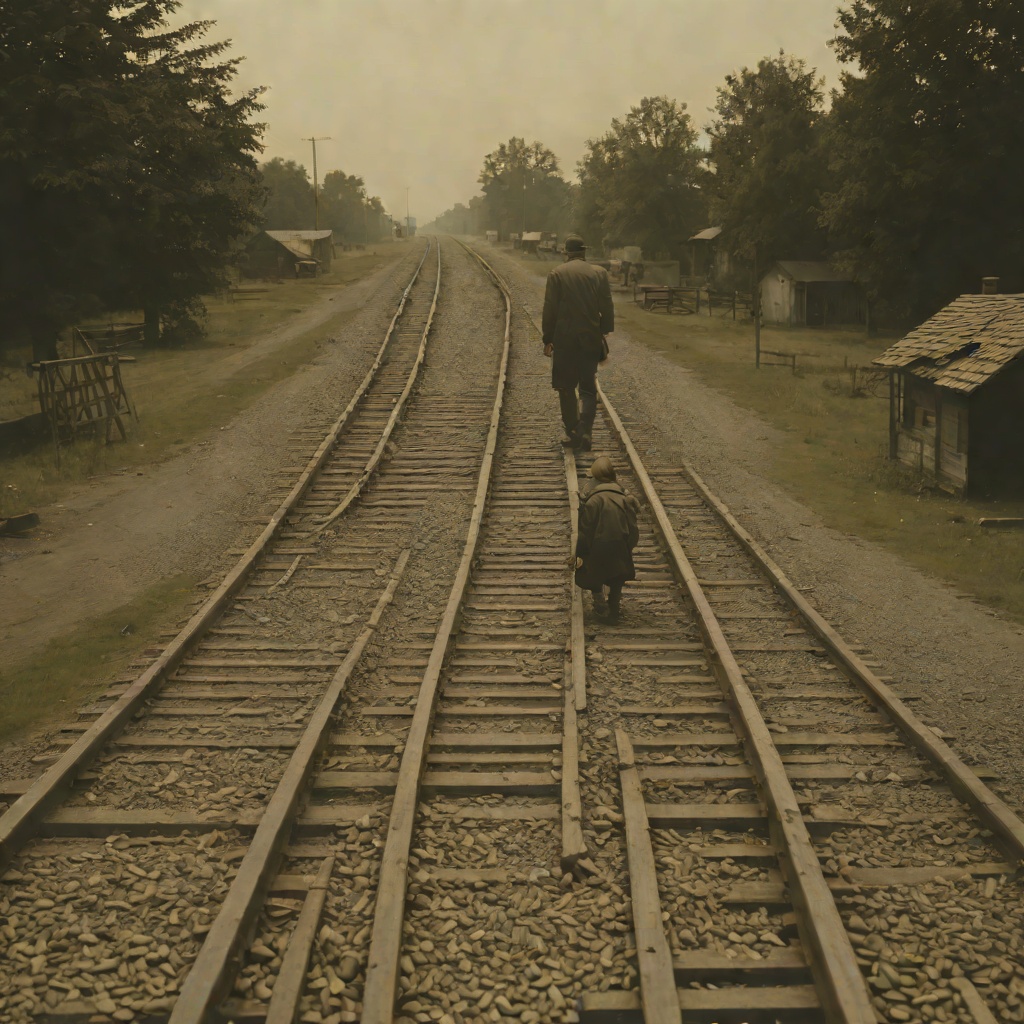
During the long train journey toward the camp, Lale spends most of his time lost in thoughts about his life in Bratislava: his job, his apartment, his friends. The train makes many stops, some lasting minutes, some hours, always outside a town or village, and occasionally Lale catches a glimpse of station names as they speed through — Ostrava, a town he knows is close to the border of Czechoslovakia and Poland, and Pszczyna, confirming that they are indeed now in Poland. The unknown question is where they will stop. As the journey wears on, the men around him grow restless and hungry; he hears the grumbling of empty stomachs and the rasping of dry windpipes, smells piss and shit and the odor of bodies too long unwashed. More than one head rests on Lale as the men take advantage of not being thrown around to rest. The memory of Bratislava becomes a private refuge against the squalor of the cattle car, a reminder of the life that once was and the life he hopes to return to.
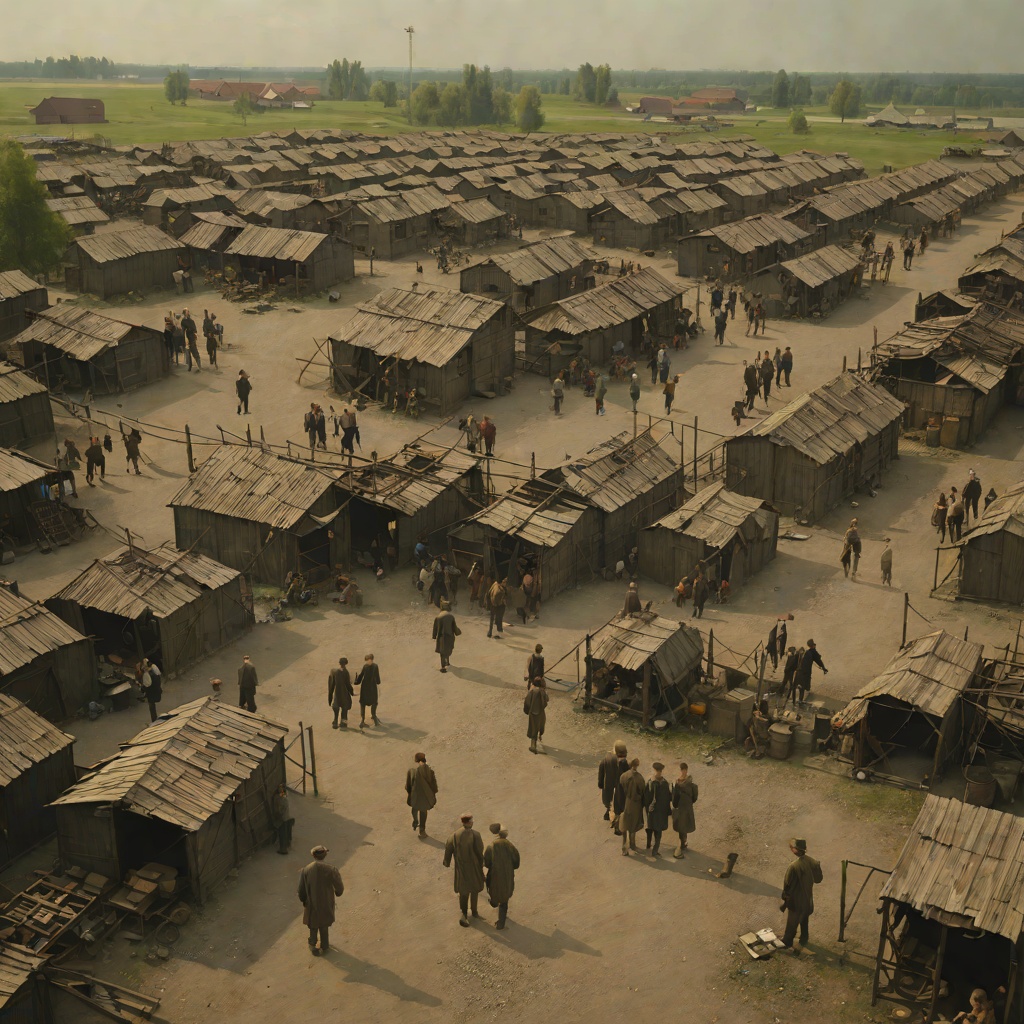
When the train finally arrives and Lale steps out into the camp, the contrast between his remembered city and his new reality is immediate and brutal. He places his suitcase on the ground and realizes with a shiver that it is unlikely he will see the case or its contents again. He touches his hand to his heart, to the money hidden in his jacket pocket, and looks to the heavens, breathing in the fresh, cool air, reminding himself that at least he is outdoors. A gunshot rings out and an SS officer stands before him, weapon pointed skyward, shouting "Move!" Lale glances back at the emptied train and sees clothing blowing away and books flapping open as small boys clamber out of trucks and snatch up the abandoned belongings. A heaviness settles between Lale's shoulder blades as he thinks, "Sorry, Mama, they have your books." The books — his mother's books, carried from Bratislava — become a small, devastating symbol of everything the city and the life it contained have already cost him.
The Ruined City After Liberation
When Lale finally returns to Bratislava after liberation, stepping off the train into the city where he has lived and been happy, where his life should have been playing out for the last three years, he finds it barely recognizable. He wanders through districts he used to know so well, many now damaged by bombing. There is nothing here for him. The city that once held his job, his apartment, and his friends now holds only ruins and absence. He has to find a way back to Krompachy, some two hundred and fifty miles away, and it takes him four days of walking, interspersed with occasional rides in horse-drawn carriages, a bareback ride on a horse, and a ride on a tractor-drawn cart. He pays, when he needs to, the only way he can: a diamond here, an emerald there — the same currency of survival that sustained him in the camp. Finally he walks down the street he grew up on and stands across from his family home, where the palings of the front fence are gone, leaving just the twisted posts, and the flowers that were once his mother's pride and joy have been strangled by weeds and overgrown grass. Rough timber is nailed over a broken window. An elderly woman comes out of the house opposite and stomps over to him.
Narrative Significance
Bratislava operates in the narrative as both a real place and a symbolic counterpoint to the camp. It is the chronotope of ordinary life — of jobs, apartments, friendships, romantic evenings walking hand in hand in a park by a lake — against which the horror of Auschwitz is measured. The city's destruction mirrors the destruction of Lale's former self: the charming playboy who refused to wear the yellow star, who believed his Slovak identity would protect him, who thought his life was too good to end in a stinkhole. When Lale returns to find Bratislava bombed and his family home derelict, the ruined city confirms that the life he left behind cannot be recovered, only rebuilt elsewhere. This is why the story ultimately moves away from Bratislava, toward a new life in a faraway land, and why the memory of the city remains bound up with everything Lale lost and everything he survived to reclaim.